Why Steel Thermal Targets Outperform Paper at Night
Thermal optics have changed how hunters and shooters train after dark. Whether you’re zeroing a thermal scope, confirming detection distance, or running night practice, one problem shows up quickly: paper targets disappear almost immediately.
This isn’t a flaw in the optic — it’s a limitation of the target material.
Understanding how thermal energy behaves at night explains why steel targets consistently outperform paper, cardboard, and polymer alternatives when viewed through thermal devices.
How Thermal Optics Actually See Targets
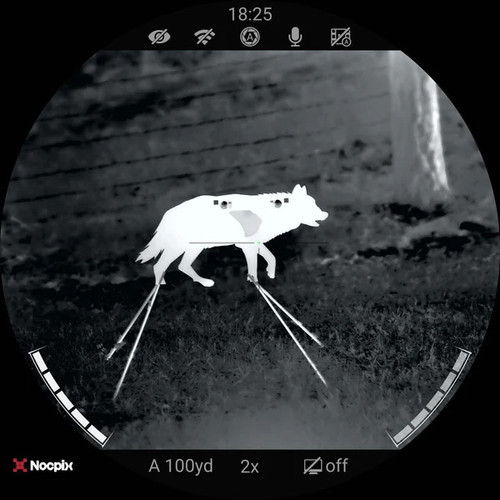
Thermal scopes don’t see color or light. They detect temperature differences between objects and their surroundings.
At night:
- The environment cools rapidly
- Targets must either retain heat or generate contrast
- Anything that matches ambient temperature becomes invisible
For a target to remain visible, it must:
- Absorb heat efficiently
- Retain that heat long enough to maintain contrast
- Release heat slowly instead of equalizing instantly
This is where material choice matters.

Why Paper Targets Fail in Thermal Imaging
Paper and cardboard are thermal insulators, not heat reservoirs.
What happens when paper is shot at night:
- A bullet impact creates a brief heat spike
- That heat dissipates almost instantly
- The paper quickly matches ambient air temperature
Within seconds:
- The target blends into the background
- Thermal contrast is lost
- The shooter is left guessing or re-shooting to regain visibility
Paper works well under visible light. Under thermal imaging, it simply wasn’t designed for the job.
Steel Targets Behave Differently Under Thermal Optics
Steel behaves as a thermal mass.
When steel absorbs energy — whether from:
- Bullet impact
- Friction
- Ambient warmth during the day
…it stores that heat instead of shedding it immediately.
What shooters see through a thermal optic:
- A clearly defined target outline
- Bright impact signatures
- Sustained contrast against cooler surroundings
Even after shooting stops, steel often remains visible for minutes instead of seconds.
Heat Retention vs Heat Signature
A common misconception is that thermal targets need to “create heat.”
They don’t.
They need to retain it.
Steel doesn’t generate heat on its own — but once heated, it:
- Cools slowly
- Maintains contrast longer
- Produces repeatable thermal signatures
This makes steel especially effective for:
- Zero confirmation
- Multiple shooters
- Training sessions without constant re-engagement
Why Thickness and Steel Quality Matter
Not all steel targets perform the same under thermal optics.
Factors that influence thermal performance:
- Steel grade
- Thickness
- Heat treatment
- Surface finish
Thinner or lower-quality steel:
- Loses heat faster
- Deforms more easily
- Produces inconsistent thermal signatures
Quality steel targets maintain:
- Structural integrity
- Predictable heat retention
- Long service life
For night shooting, consistency matters more than brightness.
Environmental Factors That Affect Thermal Visibility
Even with steel, conditions matter.
Temperature swings
Cold nights increase contrast, but also increase cooling rates.
Wind
Air movement strips heat away faster, especially on thin targets.
Humidity
Moisture can soften contrast by evening out temperatures across surfaces.
Steel targets still outperform paper in all of these conditions — but understanding the environment helps shooters set realistic expectations.
When Paper Still Has a Place
Paper targets aren’t useless — they’re just limited at night.
Paper works well for:
- Daytime zeroing
- Visible-light training
- Close-range drills with illumination
Once thermal optics are involved, steel becomes the practical choice.
Choosing the Right Target for Thermal Training
For shooters and hunters using thermal optics, the target should:
- Maintain visibility without constant re-shooting
- Provide clear impact confirmation
- Withstand repeated use
- Behave predictably across sessions
Steel targets meet these requirements because they align with how thermal imaging actually works, not how traditional targets were designed.
Final Thoughts
Thermal optics reveal differences that daylight hides. Materials that work fine during the day often fail at night — not because they’re poor targets, but because they don’t interact with heat the right way.
Steel targets succeed under thermal imaging because they:
- Retain heat
- Maintain contrast
- Support consistent night training
For shooters and hunters serious about thermal use, the target isn’t an accessory — it’s part of the system.