Understanding the New $0 Tax Stamp for Suppressors
What the $0 tax stamp means for buyers, how it affects the process, and why now is a strong time to consider a suppressor.
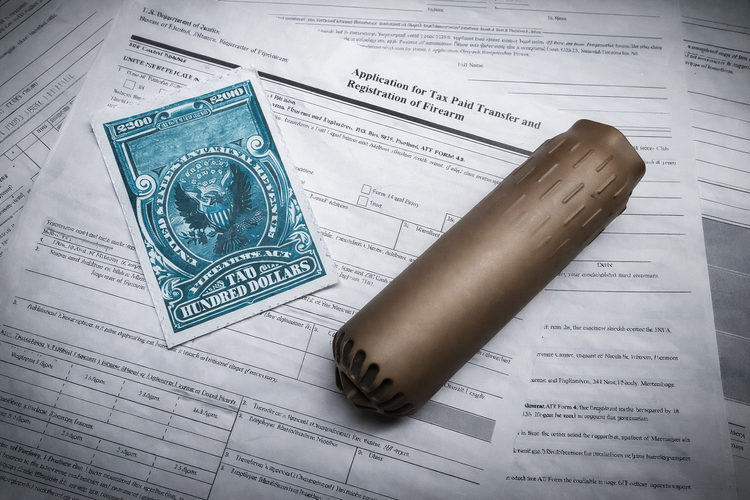
For years, anyone who wanted to legally buy a suppressor in the United States had to do two things: complete the federal NFA paperwork and pay a $200 tax stamp on each suppressor. As of 2026, that tax stamp cost has been reduced to $0 for suppressors.
The goal of this article is to explain, in plain language, what the $0 tax stamp actually changes, what stays the same, and how it benefits shooters who want to run suppressed.
What Is the “Tax Stamp” for Suppressors?
Suppressors are regulated under the National Firearms Act (NFA). Under this law, certain items – including suppressors – require:
- Filing the appropriate ATF form (usually Form 4 for buying a suppressor).
- Submitting fingerprints, a photo, and personal information.
- Passing a federal background check.
- Receiving an approved “tax stamp” before taking possession.
Historically, that tax stamp came with a $200 fee per suppressor. That fee is what has now been dropped to $0 for suppressors starting in 2026.
What Has Changed with the $0 Tax Stamp?
The biggest change is simple: you no longer pay $200 to the federal government for the tax stamp when purchasing a suppressor.
In other words, you still apply for and receive an ATF tax stamp, but the cost of that stamp is now $0 for suppressors.
For many shooters, that removes a major financial barrier and makes the idea of owning a suppressor much more realistic.
What Hasn’t Changed
While the cost has changed, the core legal process has not. To buy a suppressor, you still must:
- Purchase from a dealer who handles NFA items.
- Complete the correct ATF form (most commonly Form 4).
- Submit fingerprints, a photo, and required personal information.
- Wait for ATF approval before taking possession of the suppressor.
- Follow all state and local laws regarding suppressor ownership and use.
The suppressor is still an NFA item. The registration and approval process still exists – it’s just less expensive because the federal tax fee has been removed.
How the $0 Tax Stamp Benefits Suppressor Buyers
1. Lower Cost of Entry
Dropping the tax from $200 to $0 effectively cuts a significant chunk off the total cost of a suppressor setup. That can be the difference between “maybe someday” and “I can do this now” for many shooters.
2. More Focus on Safety and Hearing Protection
Suppressors are not just about being quiet – they’re about protecting your hearing and the hearing of everyone around you. By removing the extra tax, more people can justify treating suppressors as essential safety gear rather than a luxury.
3. More Flexibility for Multiple Setups
Shooters who run different calibers or platforms often benefit from more than one suppressor. Without a $200 tax per can, it becomes easier to build a lineup that matches your ARs, bolt guns, pistols, and dedicated hunting rigs.
4. Better Budgeting for Gear
Instead of setting aside an extra $200 per suppressor for the government, buyers can now put that money toward higher-quality optics, mounts, ammo, training, or even a better suppressor model from the start.
What Buyers Should Expect Going Forward
Because the $200 tax barrier is gone, many dealers and industry experts expect a surge in suppressor demand. That can mean:
- More people filing Form 4 applications at the same time.
- Potentially longer ATF wait times as volume spikes.
- Higher demand for popular models and possible inventory shortages.
If you know you want a suppressor, it’s smart to plan ahead, choose your model, and work with a dealer who is experienced in handling NFA paperwork.
Practical Tips If You’re Ready to Buy a Suppressor
- Check your state laws first. Suppressors are not legal in every state.
- Decide on your primary use. Hunting, range use, home defense, duty, or a mix?
- Match the suppressor to your caliber and host. Consider caliber, barrel length, and mounting system.
- Ask your dealer about the current ATF wait times. This helps set realistic expectations.
- Consider a trust if it makes sense for you. Some buyers prefer a firearms trust for shared use and future planning. Consult an attorney if you have legal questions.
Finding a Good Image for Your Blog
A strong image helps your readers connect with the topic right away. Look for a clean, professional photo showing:
- A modern rifle or carbine on a bench with a suppressor attached.
- A shooter on the range using a suppressed firearm with proper eye and ear protection.
- A close-up of a suppressor mounted on the muzzle, with the background softly blurred.
You can find high-quality, royalty-free images on stock sites such as Unsplash, Pexels, and Pixabay, or use licensed industry photography that fits your brand. Once you have your image, simply replace the IMAGE-URL-HERE in the hero section at the top of this page.
Final Thoughts
The move to a $0 tax stamp for suppressors doesn’t erase the NFA process, but it does remove a major financial hurdle. For responsible gun owners who value hearing protection, recoil reduction, and better shooting comfort, it’s a meaningful win.
As always, make sure you understand federal, state, and local laws before you buy, and work with a knowledgeable dealer who can guide you through each step of the process.