
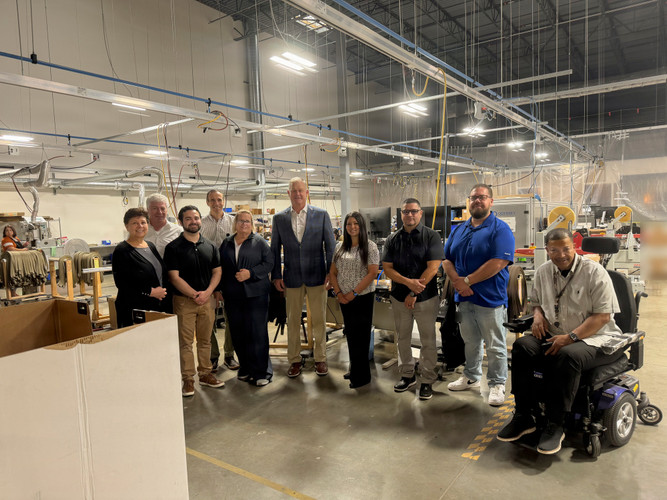
DLA Troop Support is the Defense Logistics Agency command that feeds, clothes, and medically resupplies the force — and stocks industrial hardware and construction gear behind those missions. In mid-September 2026, DLA’s top leaders spent two days in Philadelphia reviewing how that command turned contested-logistics strategy into measurable fiscal 2026 results and what it plans to scale in fiscal 2027.
Reporting on the visit described a dual agenda: prove combat-support performance already delivered, then accelerate digital modernization so decision speed matches the threat environment. For Army, Navy, and joint customers, that means fewer backorders on food and medical lines, tighter inventory accuracy, and faster contract and supplier cycles when the operating picture changes.
What fiscal 2026 performance signaled
Leaders highlighted outcomes tied to live dashboards and data tools across Troop Support’s four supply chains. Public reporting on the visit cited more than $650 million in price savings, a 23% cut in long-standing food backorders, a 15% reduction in medical backorders, and recruit training center uniform fill rates held above 98%. Audit discipline also featured: standardizing supplier-managed inventory practices and expanding on-site physical inspections, with commercial inventory balance accuracy trending toward 98%.
- Contested-logistics readiness: emergency operations staff, updated readiness tracking, and a 24/7 crisis coordination center stood up in under an hour under the “Set the Globe” priority
- Exercise proof: response times validated in major joint events such as Global Thunder and Keen Edge 26
- Pacific posture: record shipments of combat field rations, operational supplies, and emergency runway repair equipment, plus expanded food service contracts for crisis response
- Workforce depth: Pathways to Career Excellence onboarding classes brought roughly 240 entry-level professionals in, with headcount near 2,240 entering fiscal 2027
Why industrial-base partners should care
Troop Support does not only buy finished kits. Its clothing and textiles, medical, subsistence, construction and equipment, and industrial hardware lanes depend on suppliers who can deliver quality, schedule, and inventory truth. When agency leaders talk about shortening contract award times, cutting supplier delivery delays, clearing accounting backlogs, and scaling AI for decision speed, they are describing a demand signal for partners who already run documented processes and can survive audit scrutiny.
The same story shows up in how DLA Clothing and Textiles works with third-party logistics warehouses for a large share of military clothing inventory: picking, packing, and shipping only work if counts, condition, and on-time delivery are real. Shops and 3PL partners that treat inventory accuracy and delivery discipline as readiness work — not paperwork — are aligned with where Troop Support says it is going in fiscal 2027.
What to watch next
Fiscal 2027 messaging from the visit emphasized less deciding and more doing: map workflows that still create bottlenecks, field AI tools that consolidate information for faster decisions, and keep proving value to the military services on response, agility, readiness, and cost avoidance. For small and mid-size manufacturers watching DLA pipelines, the useful read is not the headline alone — it is which supply chains are modernizing first, which metrics (fill rate, backorders, inventory accuracy, award cycle time) leadership is holding up as success, and where specialty capacity will be asked to flex when exercises and crises pull stock forward.
Sources
News hook: DLA leaders’ Sept. 10–11, 2026 visit to DLA Troop Support in Philadelphia covering fiscal 2026 combat-support results and fiscal 2027 digital modernization (DefSec Wire, Sep 16, 2026). Background: DLA Troop Support mission across subsistence, clothing and textiles, medical materiel, construction and equipment, and industrial hardware; related DVIDS coverage of Troop Support warehouse audit and inventory readiness work.
